
Home / Article / Sport News
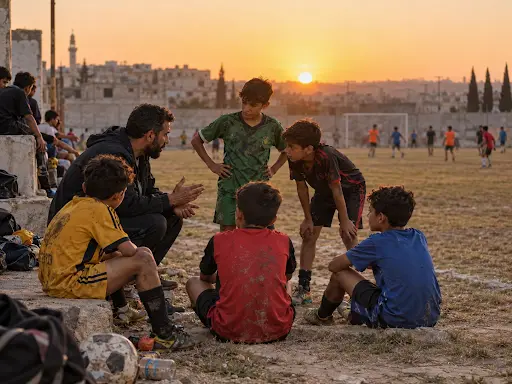
How Local Tournaments Contribute to Football Development
Local football tournaments provide a chance for the youngest participants to get the feel of organized competition. In Syria, children may engage in football competitions through school championships and community events. Through them, kids learn how to follow the rules of a football match, how to work with teammates, and how to cope under pressure. For many football talents, such a local tournament is only the beginning of their sports career.
Besides, football helps to bring the local community close to professional football competitions. Syrian supporters start by attending their local football tournaments and then proceed to watch domestic championships and international tournaments. Over time, the majority of adult fans learn about teams' form, recent results, and statistics of their favorite players. Some fans use their knowledge when betting on professional football matches at Melbet (Arabic: ميلبيت).
Why Local Football Competitions Matter
Community leagues provide frequent opportunities for youth football players to play against opponents that they do not know. Players can use practice games to polish their skills, but in competitive games, they have to make quick decisions. Midfielders have to find open spots, and defenders learn to react when their opponents turn.
Relationships between amateur football and professional football impact the way that supporters attend football games. Fans who watch amateur football games can develop awareness of tactics and performance of the teams. This awareness can further be used in betting on professional football games. Adults may need to compare previous outcomes of games, look at lineups, and evaluate betting odds at a betting APK (Arabic: تطبيق الرهان APK) before putting money on a certain outcome.
Building Experience Through Regular Matches
It is not uncommon for players to excel in practice but not during actual competition games. This is due to the pressure of the opponents, the refereeing process of the game, and the quickness required from the players. Participation in regular tournaments will be helpful for young football players to cope with the situation.
The coaches get to see how players react in such situations. There are some players who are good passers, and there are those who have good positioning and defending skills. The below-mentioned table clarifies how the local competitions benefit football in different aspects.
|
Development area |
Contribution of local tournaments |
|
Technical skill |
Players develop skills by playing against live opponents |
|
Tactical thinking |
Teams adjust to various playing styles |
|
Physical fitness |
Activity makes players more agile and strong |
|
Communication |
Players cooperate when playing |
|
Mental preparedness |
Athletes gain confidence through competition |
|
Talent spotting |
Coaches observe players during matches |
Identifying Talented Players at an Early Age
There are other ways that goalkeepers and strikers can be identified aside from established academies. Talented goalkeepers can be identified during school tournaments. Likewise, the best strikers can be identified during neighborhood tournaments.
Through local events, coaches can find players who lack experience with club football training programs. Observing many games helps them judge the skill level of such players.
Youth tournaments, school tournaments, and local football festivals have also been used as grassroots development programs in Syria. Such events offer chances for children from various parts to play football.
What Coaches Look for During Tournaments
While goals and assists get all the focus, the seasoned coach looks at other factors as well. He looks at how football players act off the ball, and if they know what is expected of them.
The key attributes are:
- Making decisions: Making effective passes during difficult situations.
- Positioning: Positioning oneself in the correct position while attacking and defending.
- Ball possession: Maintaining possession of the ball amidst efforts by the opposing team to steal the ball.
- Communication: Giving directions and assisting fellow players.
- Work rate: Working hard throughout the game.
A gifted footballer might show many of these attributes before he even learns complex technical skills.
Strengthening Football Development in Syria
It would be advantageous for Syrian football if the young athletes participate in matches in proximity to their home regions. The local clubs and schools provide an ideal platform for the young athletes who want to refine their skills.
A youth football league comprising teams such as Al-Wahda, Al-Jaish, Al-Shorta, and Barada was organized by Damascus in March 2026. The matches were intended to be held at different sporting venues in Damascus.
The Role of Schools and Community Clubs
Football is taught to students who cannot afford education at private schools by schools. The football teachers at the schools organize matches between classes and pick players, making them play regularly.
However, the environment at the community clubs becomes more organized, with coaches organizing tactical practice and preparing teams for organized matches.
Cooperation between the school and club will allow for the formation of an achievable development path. The teachers from schools can refer promising students to community coaches, who will test them in competitive games.
How Tournaments Improve Team Performance
It is indeed very crucial, but football is a team game. It is quite easy to develop teamwork abilities through local matches.
The ability of a team to adapt to other teams depends on the regularity of playing against various opponents. The type of match may require a slow game or a quick one.
It is also useful for players to get used to their roles in the game. A full-back understands when it is time to attack, and the defensive midfielder is able to control the space around him/her.
Learning From Different Opponents
Training against familiar opponents may become monotonous for players. Fixtures in the tournaments present new formations and unknown playing styles.
Youth players develop pattern recognition skills gradually as they play their games. They learn to obey tactical commands amid changes in the game conditions.
The following exercises help achieve the stated objectives:
- Discussing key game situations at the team meetings.
- Repeating difficult-to-perform movements in previous games.
- Changing positions during suitable development games.
- Arranging friendly matches against local clubs.
These exercises should be adapted by coaches depending on the age and abilities of young players. Younger individuals require chances to try themselves out, whereas older teams should pay attention to tactics.
The Social Benefits of Community Football
Local football tournaments often turn out to be key events within the community. Family members come to watch games, teachers motivate their school teams, and volunteers help the organizers.
In Syria, such events help create better neighborhood relationships, as children have an opportunity to meet people from other social strata and establish new friendships on the basis of sport.
Football helps develop an attitude of respect towards the accepted rules, as well as acceptance of referees' decisions and rivals' achievements.
Encouraging Long-Term Participation
Children will be motivated to keep playing if they have enjoyed their initial encounters. Competitive games provide memorable encounters through closely fought games, self-improvement, and group victories.
The parents' role is to ensure their children attend regularly and learn good sporting manners. The coach could play his role well by allowing everyone to get an opportunity to play.
Tournaments organized within the community create opportunities for individuals willing to coach or organize the matches.
Supporting Future Professional Footballers
Professional soccer teams require a constant influx of skilled young players. Local tournaments can serve as the basis of such an approach by linking initial exposure to higher-level training.
A talented teenager could be spotted while competing in a school tournament. Good results could give way to a chance in a local club and further participation in a youth team.
Success requires regular training and participation in competitions. It also requires time for physical development and learning new tactics.
Creating Clear Development Pathways
Football clubs can improve their youth development process through planning the schedule of competition calendars for all age groups. Healthy competitions provide the children a chance to develop at the right pace.
Coaches may also coordinate among themselves when children are moving from one club to another. Information regarding past training and favorite positions will come in handy.
Good programs have room for children who grow up slowly. Not all children develop at the same rate, and performance as children does not predict future performance.