
Home / Article / Sport News
In the world of sports, enormous stadiums always make a strong impression with their scale, architecture, and ability to accommodate tens of thousands of spectators. Beyond hosting football matches, stadiums can also become cultural and architectural symbols of an entire country. For those who regularly follow Xoilac TV, the question of which stadium is the largest in the world is always an interesting topic. So, what is the largest stadium in the world today?
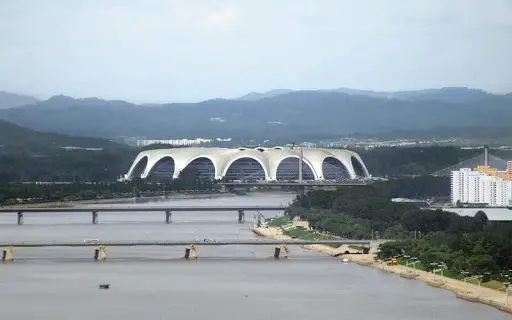
The name most commonly mentioned is the Rungrado 1st of May Stadium in Pyongyang, North Korea. The venue is renowned for its flower-shaped architecture and a reported capacity of more than 100,000 spectators. This article explores the history, scale, architecture, and notable events associated with this remarkable stadium.
Which Is the Largest Stadium in the World?
When searching for information about the largest stadium in the world, Rungrado 1st of May Stadium frequently appears at the top of capacity rankings. The stadium is located on Rungra Island, along the Taedong River in the capital city of Pyongyang, and was inaugurated in 1989.
The World's Largest Stadium – Rungrado 1st of May Is the Standout Name
The stadium's name comes from its location on Rungra Island and May 1, International Workers' Day. The venue features a distinctive domed roof with multiple sections forming an image resembling a blooming flower. This unique design is one of the reasons the stadium has become one of the most recognizable sports structures in the world.
According to various sources, the stadium was once reported to have a capacity of around 150,000 people. However, following changes to the seating arrangement and renovation work, many sources now use a figure of approximately 114,000 seats. Therefore, capacity figures may vary depending on the period and statistical source.
Fans who enjoy tructiepbongda can visualize the scale of the stadium by considering that a major event held there could attract an audience comparable to the population of a small city.
History of Rungrado 1st of May Stadium
Rungrado 1st of May Stadium was built in the context of North Korea's efforts to develop a large-scale sports facility in the capital, Pyongyang. The stadium was inaugurated on May 1, 1989, and quickly became an important venue for sporting, cultural, and performance events.
Unlike many modern stadiums designed primarily for football, Rungrado 1st of May is a multipurpose facility. Its interior spaces can accommodate various types of activities, ranging from sporting competitions to large-scale performances.
Throughout its history, the stadium has undergone renovation projects aimed at upgrading its facilities. Several areas have been repaired and modernized, allowing the venue to continue hosting major events.
For readers who follow Xoilac Z, the stadium's history is particularly noteworthy because it is not merely a sporting venue but is also associated with numerous large-scale national activities.
The Stadium's Unique Architecture
The most distinctive feature of Rungrado 1st of May Stadium is its roof. The structure has 16 large roof sections arranged in a shape resembling flower petals, creating an appearance that differs significantly from traditional oval-shaped stadiums.
The most distinctive feature of Rungrado 1st of May Stadium is its roof.
This architecture provides both aesthetic value and coverage for most of the spectator stands. Inside the stadium are the playing field and large seating areas arranged around it.
The stadium's architectural scale makes it one of the most prominent sporting venues in Asia. When viewed from above, its flower-like shape makes Rungrado 1st of May easily recognizable.
For those interested in the bxh bóng đá on Xôi Lạc TV, learning about large stadiums also provides an interesting perspective on the infrastructure behind international football competitions and events.
Capacity of Rungrado 1st of May Stadium
One of the reasons Rungrado 1st of May is considered the largest stadium in the world is its enormous capacity. For many years, the figure of 150,000 spectators has frequently appeared in descriptions of the venue.
However, it is important to distinguish between the capacity reported in historical documents and the number of seats available during periods following renovations. Some current sources estimate the stadium's seating capacity at approximately 114,000.
The stadium has a capacity of up to 150,000 spectators.
This difference stems from renovation projects, changes to the seating design, and different methods of calculating capacity. Therefore, when comparing the world's largest stadiums, readers should consider the time period and statistical criteria rather than relying on a single figure.
The key point is that Rungrado 1st of May remains among the stadiums with the largest capacities on the planet.
Notable Events at Rungrado 1st of May
Rungrado 1st of May is not only used for football but has also hosted numerous large-scale sporting events and performances. The stadium has been used for international football-related events as well as special artistic programs.
One of the most famous activities associated with the stadium is its large-scale mass games and group performances. With its enormous area and capacity, the venue can create an impressive visual spectacle when tens of thousands of people participate in the same program.
The stadium has also hosted matches involving the North Korean national football team. Its ability to accommodate various types of events gives the venue a special role in the sporting and cultural life of Pyongyang.
Viewers watching live football on Xoilac Z who explore famous stadiums will notice that Rungrado differs considerably from the leading football-specific stadiums in Europe.
Rungrado 1st of May Compared With Other Large Stadiums
When discussing the largest stadium in the world, Rungrado 1st of May is often compared with famous venues such as Narendra Modi Stadium in India, Michigan Stadium in the United States, and Camp Nou in Spain.
Narendra Modi Stadium is renowned for its enormous capacity and was primarily built to host cricket. Meanwhile, Michigan Stadium is one of the American football venues in the United States known for attracting exceptionally large crowds.
Narendra Modi Stadium is renowned for its enormous capacity.
Camp Nou holds a special place in European football thanks to its long history associated with Barcelona. However, ranking criteria can vary depending on whether the current capacity, original design, or the maximum capacity ever reported is being considered.
According to Xôi Lạc Z, the differences between stadiums are not limited to spectator capacity but also include their purpose, architecture, history, and influence on the sporting world.
Things to Know About the World's Largest Stadium
As can be seen, the largest stadium in the world is generally determined based on seating capacity, with Rungrado 1st of May Stadium in Pyongyang being the most prominent name. The venue stands out for its enormous scale, flower-shaped architecture, and ability to host a wide range of events.
The stadium's capacity may be reported differently depending on the source and time period, particularly because of changes made following renovation projects. Therefore, when researching this topic, readers should pay attention to the statistical criteria being used.
For football enthusiasts, exploring large stadiums is a great way to expand their knowledge beyond the numbers found in the football standings on Xoilac Z. Every venue has its own history, architecture, and story, all of which contribute to the appeal of the world's most popular sport.
Conclusion
Rungrado 1st of May is one of the world's most impressive large-scale sporting venues and is frequently mentioned when searching for the largest stadium in the world. With its enormous capacity, distinctive roof design, and ability to host a wide range of events, the stadium has become a prominent symbol of Pyongyang.
From a football perspective, learning about large stadiums helps fans better understand playing environments and supporter culture around the world. When watching Xoilac Tivi, viewers can also pay attention to the stadium, crowd size, and atmosphere in the stands for a more complete football experience.